Category: Self-Trust

Rebuilding the relationship with yourself after it has been broken by others or by life.

  • How to Rebuild Self-Trust After It’s Been Broken

    How to Rebuild Self-Trust After It’s Been Broken

    The hardest part about betrayal is not always what the other person did. Sometimes it is that you did not see it coming. Or you saw it coming and stayed anyway. And now something in you keeps asking: if I got that so wrong, how do I trust anything I think I know about myself?

    That question has a way of settling in quietly. You start second-guessing decisions that used to feel clear. You ask five people for their opinion before you can make a simple choice. You replay old situations looking for what you missed, as if finding the flaw in your past thinking will somehow protect you from future pain. And somewhere along the way, your own instincts start to feel like the last thing you should listen to.

    I want to offer something different here, because I have been in that place and I know how disorienting it is.

    What self-trust actually means

    We have been taught to think of self-trust as infallibility. Like if you really trusted yourself, you would never miss a red flag or make a decision that cost you something. You would see everything clearly and always choose right.

    That is not self-trust. That is the impossible standard we set for ourselves after something goes wrong so we have a reason to keep punishing ourselves.

    Real self-trust is much quieter than that. It is the belief that when things go sideways, you will be able to handle it. That you will tell yourself the truth even when the truth is hard. That you will not abandon yourself in the middle of a hard season the way someone else once did. It is having a relationship with yourself that is honest enough that you do not need constant outside validation just to feel like you are making reasonable choices.

    How you actually start to rebuild it

    Small kept promises. That is where it begins. Not the dramatic ones, the big declarations you make when you are feeling motivated. Those are easy to break and every break takes something from you. Start with something so small it almost feels pointless.

    Say you are going to bed by eleven and then go to bed by eleven. Say you are not responding to that text tonight and then do not respond to it. Tell yourself you will take a walk around the block and then take the walk. These things feel almost embarrassingly small. They are not. Every time you follow through on something you told yourself you would do, you are laying down a track record with yourself. Over time, that track record becomes something you can actually stand on.

    You also rebuild self-trust by starting to treat your own inner experience as information worth paying attention to. When something feels off, notice that instead of immediately talking yourself out of it. You do not have to act on every instinct right away. But stop dismissing them like they mean nothing. They have been trying to tell you something for a long time.

    And then there is the part that is the hardest for most of us: forgiving yourself for what you did not know when you did not know it. You made the choices you made with the information, the resources, the self-awareness, and the wounds you were carrying at the time. Holding those choices against your current self is like being angry at a child for not knowing what they had not yet been taught.

    You knew what you knew. Now you know more. That is how it is supposed to go.
  • When They Told You That You Were Too Much

    When They Told You That You Were Too Much

    One of the most damaging things you can tell a child is not that you do not love them. It is that they are too much.

    Because being told you are unloved is devastating, but a child can sometimes locate the problem in the other person. Being told you are too much places the problem squarely inside you. Your energy is too big. Your feelings take up too much space. Your needs are exhausting. Your voice is too loud. Your excitement is showing off. And over time, a child does not just hear that message. They become it. They start editing themselves down before anyone else has to ask them to.

    What shrinking does to a person over time

    A child who is consistently told they are too much does not simply become humble. They disconnect from themselves. They stop reaching for things. They learn to pre-emptively quiet their voice, pull back their joy, dim whatever it is about them that seemed to bother people. They practice making themselves smaller, not because they want to, but because at some point smaller started to feel safer.

    And then they carry that into adulthood. They sit in meetings and do not speak even when they know the answer. They do not ask for what they need because asking feels like being a burden. They apologize for taking up space in rooms they were invited into. They have a hard time receiving a genuine compliment without immediately deflecting it, because deep down some part of them is still waiting for someone to tell them they are getting too big for themselves again.

    Who finds us in that state

    People with a solid sense of their own worth tend to move toward relationships that are mutual. People who have been taught to question their worth tend to move toward relationships where someone else defines their value for them, because that pattern feels like home.

    Controlling people, emotionally immature people, people who need someone small so they can feel large, they find us. Not always on purpose, and not always consciously. But they recognize the wound. Someone who has already learned to doubt themselves is much easier to keep in place, because they have been practicing it their whole lives.

    And the cruelest part is that a lot of survivors experience those relationships as confirmation of what they always believed about themselves. When really, those relationships are just repeating the lesson that was first taught at home.

    Where it actually starts to shift

    It starts when you question the original message instead of accepting it as fact.

    Who told you that you were too much? What did they actually stand to gain from you believing it? Were they someone with the emotional capacity to hold your full self, or were they someone who found your confidence, your light, your potential, threatening? Because those are two very different things and only one of them says something true about you.

    Most of the people who taught us we were too much were not responding to our actual character. They were responding to their own discomfort. Their limitations became our instructions. And we have been following instructions that were never meant to lead us anywhere good.

    For me, faith was part of this

    I will be honest about this because it is part of my story. Learning to see myself through God’s eyes rather than through the eyes of people who misunderstood me changed something foundational for me. My worth stopped being a thing I had to earn or prove or carefully maintain. It became something I stood in because of whose I am, not because of how small I had managed to make myself to fit inside someone else’s comfort zone.

    When your sense of identity shifts at that level, your decisions shift with it. You stop accepting treatment that once felt normal because it no longer lines up with how you understand yourself. You stop chasing validation from people who were never equipped to give it. The story that you were too much starts to lose its grip, and what you find underneath it is someone who was never the problem to begin with.

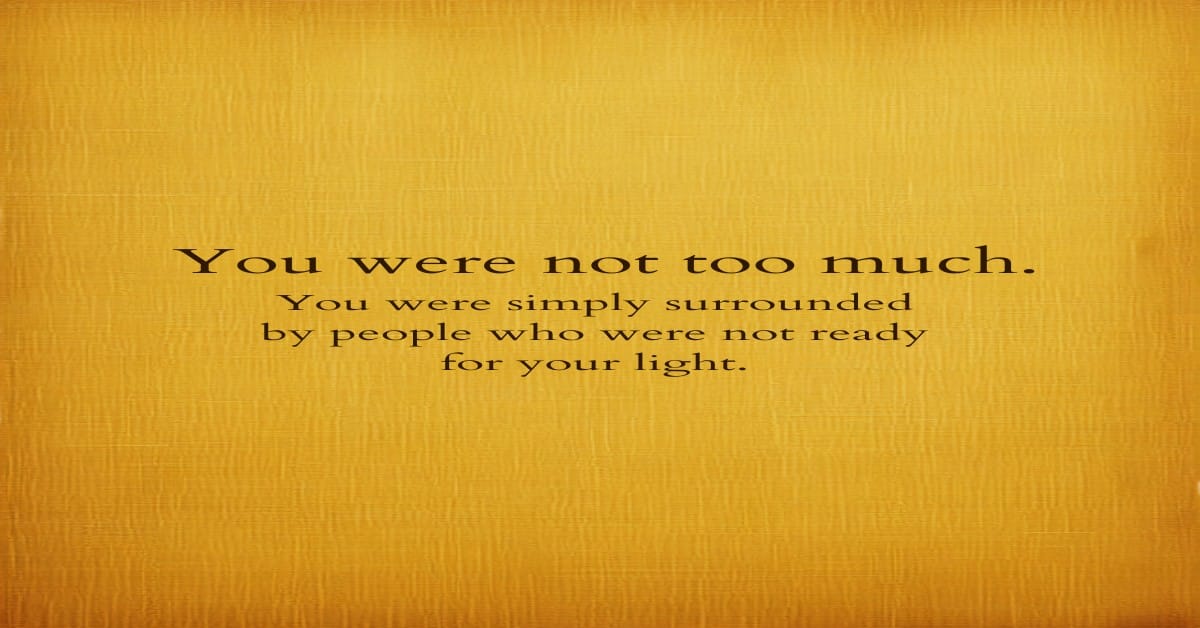
    You were not too much

    Healing is not about becoming someone new. It is about finding your way back to the person you were before the world convinced you to become less.

    You were not too much. You were in the wrong rooms, around the wrong people, at a time when you did not yet have the tools or the language or the freedom to choose differently. That is not a character flaw. That is just what happened. And it does not have to be the whole story.

  • What Soft Strength Actually Means

    What Soft Strength Actually Means

    When I started this project, someone asked me if “soft strength” was a contradiction. Like the two words were working against each other and one of them had to give.

    I sat with that for a while before I responded, because I understood why the question made sense.

    Most of what we have been taught about strength is that it looks like not needing anything. Not breaking down. Being the one who holds the room together even when you are falling apart inside. We learned early that softness was something to outgrow, something that made you easy to take advantage of, something that other people used against you when they wanted to.

    So the idea that soft and strong could live in the same body, at the same time, feels almost too good to be true for a lot of us.

    But what I have come to understand is that the loudest, hardest, most defended version of strength is often the most fragile one. Because it depends on nothing getting through. And life always finds a way through.

    What soft strength actually is

    It is not about being pleasant or agreeable or easy to be around. It is not about turning the other cheek when someone keeps hurting you. And it is not something you perform for other people so they see you as healed.

    Soft strength is what happens when you know yourself well enough that you do not need the world to confirm your worth before you can feel okay. It is the ability to pause before you react and actually choose how you want to respond. It is saying no to something and not spending the next three days apologizing for it in your head. It is letting someone love you without immediately waiting for the moment it goes wrong.

    It is knowing the difference between your intuition and your anxiety. And trusting the right one.

    That kind of knowing does not come from nowhere. It comes from doing the kind of work that nobody else can see. The kind you do in the quiet, when you finally stop running from yourself long enough to be honest about what is actually going on inside you.

    Why it is gentle

    Soft strength is not gentle because it is weak. It is gentle because it is secure. There is a difference, and once you feel it, you cannot unfeel it.

    Security does not have to prove anything. It does not have to fight for the last word. It does not collapse when someone is disappointed in it. It can hold space for hard conversations without becoming the hardness itself.

    That is what this project is about. Everything here is built around helping you find your way to that kind of grounded, quiet, real power. Not overnight. Not through a list of steps you check off and then declare yourself done. But through the slow, honest work of actually learning to trust yourself again.

    That work is possible. I know because I am in it too.