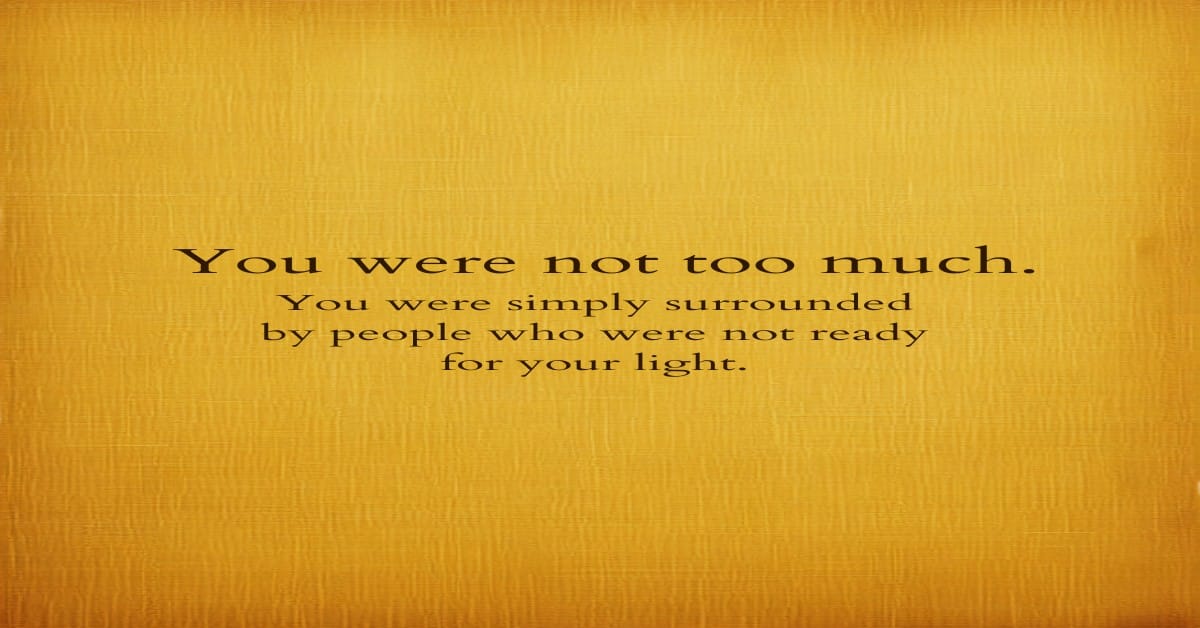
One of the most damaging things you can tell a child is not that you do not love them. It is that they are too much.
Because being told you are unloved is devastating, but a child can sometimes locate the problem in the other person. Being told you are too much places the problem squarely inside you. Your energy is too big. Your feelings take up too much space. Your needs are exhausting. Your voice is too loud. Your excitement is showing off. And over time, a child does not just hear that message. They become it. They start editing themselves down before anyone else has to ask them to.
What shrinking does to a person over time
A child who is consistently told they are too much does not simply become humble. They disconnect from themselves. They stop reaching for things. They learn to pre-emptively quiet their voice, pull back their joy, dim whatever it is about them that seemed to bother people. They practice making themselves smaller, not because they want to, but because at some point smaller started to feel safer.
And then they carry that into adulthood. They sit in meetings and do not speak even when they know the answer. They do not ask for what they need because asking feels like being a burden. They apologize for taking up space in rooms they were invited into. They have a hard time receiving a genuine compliment without immediately deflecting it, because deep down some part of them is still waiting for someone to tell them they are getting too big for themselves again.
Who finds us in that state
People with a solid sense of their own worth tend to move toward relationships that are mutual. People who have been taught to question their worth tend to move toward relationships where someone else defines their value for them, because that pattern feels like home.
Controlling people, emotionally immature people, people who need someone small so they can feel large, they find us. Not always on purpose, and not always consciously. But they recognize the wound. Someone who has already learned to doubt themselves is much easier to keep in place, because they have been practicing it their whole lives.
And the cruelest part is that a lot of survivors experience those relationships as confirmation of what they always believed about themselves. When really, those relationships are just repeating the lesson that was first taught at home.
Where it actually starts to shift
It starts when you question the original message instead of accepting it as fact.
Who told you that you were too much? What did they actually stand to gain from you believing it? Were they someone with the emotional capacity to hold your full self, or were they someone who found your confidence, your light, your potential, threatening? Because those are two very different things and only one of them says something true about you.
Most of the people who taught us we were too much were not responding to our actual character. They were responding to their own discomfort. Their limitations became our instructions. And we have been following instructions that were never meant to lead us anywhere good.
For me, faith was part of this
I will be honest about this because it is part of my story. Learning to see myself through God’s eyes rather than through the eyes of people who misunderstood me changed something foundational for me. My worth stopped being a thing I had to earn or prove or carefully maintain. It became something I stood in because of whose I am, not because of how small I had managed to make myself to fit inside someone else’s comfort zone.
When your sense of identity shifts at that level, your decisions shift with it. You stop accepting treatment that once felt normal because it no longer lines up with how you understand yourself. You stop chasing validation from people who were never equipped to give it. The story that you were too much starts to lose its grip, and what you find underneath it is someone who was never the problem to begin with.
You were not too much
Healing is not about becoming someone new. It is about finding your way back to the person you were before the world convinced you to become less.
You were not too much. You were in the wrong rooms, around the wrong people, at a time when you did not yet have the tools or the language or the freedom to choose differently. That is not a character flaw. That is just what happened. And it does not have to be the whole story.
Leave a Reply